The ultimate goal of studying hard is to get a
job. But many of the bright students who are intelligent in their
studies fails in interview round. The aim of this post is to provide
some basic interview tips for freshers which help them in clearing their
job interview successfully. While giving an interview the main concern
of the interviewee is to impress his/her interviewer. So here are some
basic interview tips for freshers that help you in clearing your
interview.
Basic Interview Tips for Freshers:
1) Information about the Company
Before
attending any interview for any company, make sure you know enough
about the company and you are willing to work in this company. To do
this, Go through the history and the present position of the company. It
will help you to understand them and make you more confident. 2) Your Resume
A
resume is the main intangible tool to get a job. Prepare your resume
according to the job profile the company is offering and highlighting
your strength required for the job. Remember one thing, that the points
you are mentioning in it should be the ones, you are really intended to.
This should not be bombastic and not be false just to impress the
interviewer. 3) Practice Makes you Perfect
Practice
the way of your speaking and answer the questions which are often
asked. Improve your communication skill. If you are good at
communication, half of your job is done. Also Read:Top 10 Most Important Personality Development Tips 4) Arrive Early
In
today’s rushing world, no one can waste their precious time for waiting
for someone. So arrive five-minute early. So that you can relax there.
It will also depict your punctuality. Top 10 Basic Interview Tips for Freshers5) Dress Like you mean Business
Your
dressing sense is the mirror of your personality. It defines the
society you belong to. Dress like you are a part of them. Always wear a
formal suit. Black trouser and a white shirt would be the best
combination. Avoid wearing colorful shirts and trousers. Look like a
professional. 6) Switch Off your Phone
The
disturbance is not acceptable in any form and the job is more important
than your one call or a message, so turn off your phone before entering. 7) Show Enthusiasm
Give an answer with such a great feel so that interviewer can feel your enthusiasm for the job in your voice only.
Also read: Top 10 Basic Group Discussion Tips for Interview 8) Keep Eye Contact
It is required to have an eye to eye contact with the interviewer because it shows your confidence and your honesty. 9) Be Yourself
People
like natural things more than man-made. Be natural in front of the
interviewer. Don’t try to copy an accent which you will not able to
continue after some time. 10) Be a Part of them
Try to connect yourself with them, show your interest that you want to be a part of their family.
These
are some basic interview tips for freshers; if you want to clear your
interview successfully then you must have to follow all the above tips. Also See:Top 10 Universities in the World 2013 There are some questions that are often asked in an Interview-
Q1. Tell me about yourself?
Q2. Why should we hire you?
Q3. What are your salary expectations?
Q4. Which is more important to you money or growth?
Answer
such questions clearly and to the point. Don’t try to explain them like
a story reading, do not be argumentative while answering, address
politely and with confidence.
Conclusion
We
all know the importance of prestigious jobs in our life and it’s not
easy to grab such jobs for the first time. These are the basic interview
tips for freshers. So, if you really want to clear your interview then
must remember all the above points.
Do share your view how you like our article on basic interview tips for freshers.
Here are 5 most common interview questions for freshers – things that HR managers ask the candidates about themselves. For fre...
Here are 5 most common interview questions for freshers – things that HR managers ask the candidates about themselves. For freshers, facing your first interview is nothing less than
having bittersweet feelings at their best. Not only are you too excited
but also very nervous for those one-on-one interview rounds. The mixed
feelings can modify your thoughts and either leave you speechless or you
end up blabbering unnecessary stuffs.
Both the above situations would work against you and you may
lose out on a good work opportunity. To successfully clear all your
interview rounds at one go and leave a positive impact on your HR
manager, we bring to you most common interview questions and answers for
freshers.
Casual greeting – “Hello, how are you today?”
One of the most common interview questions, it is intended to
make you feel comfortable and settle down for further rounds. You need
to answer with a positive and pleasing smile. In case you had any
difficulties during the day, you may mention that too. If you’ve had
problems reaching the interview venue, do say about that. However, do
not go overboard. Example: I’m alright sir, but just that I couldn’t seem to locate the area properly, as I’m not too familiar with the place around.
Tell us something about yourself
This has to be the best and most favourite HR question. Often
candidates stretch their answer to impress the interviewer. However, the
answer is expected to be simple sounding yet informative about yourself
as in:
Highlight your education background – especially your highest qualification
Provide a brief about your family and where you live
Mention your major achievements, hobbies, and interests in short
Example: I’m Priya Singh from Bombay. I did my B.Com in Accounting &
Finance from NM College, Bombay University. I also completed my plus
two from the same college and topped the boards with 97% in HSC Boards. I
have four members in my family and I live in Andheri. I love reading
books, especially on political science; my favourite authors being
Aristotle, John Mill, and John Keynes.
Tell us something about your key strengths?
With this one again being one of the most common interview
questions, you must know that the idea is to understand how much you
know about yourself. Besides, the question digs deep on your confidence
level and your knowledge about your own strength. You may sound like:
Stay simple and positive. Begin as “I take things positively, and I am a very positive person”
You may mention one of your personal experiences to support your answer
If you have a fair idea about the job profile, you can also include short pointers about it.
Example: Mam, I believe my greatest strength is my ability to grasp
things quickly. Like for instance, I had to put up a presentation in
college at inter-college arts exhibition. In that, despite being
introduced to the rest of the team members at the last moment, I was
able to easily understand the artifacts and represent successfully.
Where do you see yourself in the next 5 years?
While the question aims at knowing your career goals, it also
evaluates on your commitment towards the organization. As in, if at all
there are any immediate plans for you to switch over in search of better
prospects. That’s why, the question can be a bit too tricky. You should
be knowing how to tackle the situation with proper reasoning and
vocabulary. Example: In the next five years, I visualize myself taking up different
roles within the team. Going strength to strength to strength from being
a marketing executive to handling a team and various projects. For
that, as a fresher, I wish to absorb as much knowledge and take my
learning curve ahead.
Why should we hire you?
The intention of this question is to understand which quality
of yours would be more helpful for the company’s growth. However, since
you’re a fresher, you cannot explicitly highlight any of your expertise
in any particular domain. Hence, you need to tackle the question by having apt knowledge
about the company and your specific qualities that would suit the
organization. In case you don’t know the company well, you may mention
some common qualities like quick learning, team player, flexibility,
etc. Example: During my college time, I’ve had a good number of internships
and exposure to the industry. Being a fresher, it wouldn’t be difficult
for me to adjust in the new environment. Hence, we can save on training
time and other resources. Above are some of the most common interview questions and
answers for freshers about the candidate. In the forthcoming posts, we
shall discuss some more questions and answers HR managers ask freshers
regarding the company and other general questions.
Related Articles: 7 Tips to Bounce Back After Receiving Interview Rejection Letter Tips & Tricks to appear for an Informational Interview 8 Tips to Excel at a Skype Interview
Top 20 Fresher Interview Questions With Answers! After making your way through the shortlisting process, your way ahead is dependant on y...
Top 20 Fresher Interview Questions With Answers!After making your way through the shortlisting process, your
way ahead is dependant on your performance in this crucial round – the
interview. And it needs, apart from the right knowledge and skills,
confidence and poise. Dealing with personal interviews becomes
easier once you’ve faced a few rounds. However, for a fresher, it may
still be a daunting task. And that’s why, in this blog, we aim to help
you with this by taking up 20 fresher interview questions and their answers.
Confidence: A Core Interview Problem
The thing that most candidates lack so often isn’t
qualification or skill, but the confidence to handle the questions
thrown at them. For this very reason, they find themselves lost and
confused during the interaction. Knowing common questions beforehand can
be very helpful for presenting a more confident self in front of the
interviewer.
Common Fresher Interview Questions
For fresher candidates who are facing interviews for the first time, we bring here the Top 20 fresher interview questions and their best answers:
1. Tell me about yourself.
Understand what the interviewer wants to know when he asked you tell him about yourself.
A common icebreaker, this is the candidate’s chance to set the tone
of the interview and to present themselves in the best possible light.
Why this question:
The interviewer won’t jump to level difficult. They are
experienced enough to handle all type of interviewees so the first
question is normally to make the person comfortable. This doesn’t mean
that the answer isn’t considered.
What are they ‘really’ asking:
It’s easy amble through on this one. After all, you have known
yourself for many years. However, if you go into this without any
preparation, then all those years won’t count for much. By asking this question, the interviewer usually intends to know things beyond your resume.
How to answer:
Prepare well for this question and answer smartly. It would be better if you give a quick but well-defined summary of your background.
Here are a few cues:
Indulge in specifics, but don’t narrate your resume.
The Right Answer:
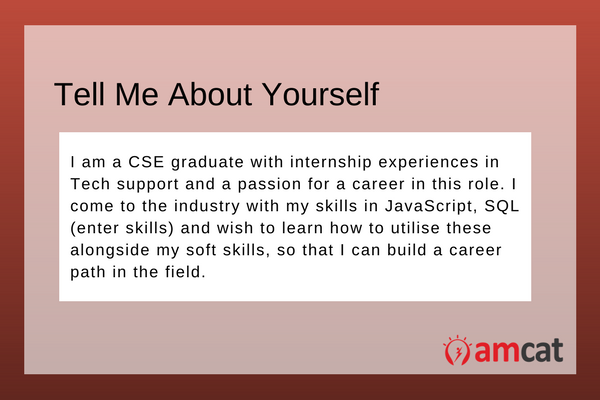
A model answer for a CSE graduate, asked the question – Tell Me About Yourself.
Read more on how to answer Tell Me About Yourself in a job interview.
2. Why should we hire you?
“Why should we hire you?” Job interview question.
Usually positioned mid-session or near the end, this one from the set
of fresher interview questions is a chance to portray yourself as the
most ‘fit’ candidate for the position.
Why this question:
Direct and to the point, it’s not a chance to talk about why it’s a good opportunity for you. Afterall, you were shortlisted and did beat so many applicants to sit on the hot seat and that means something.
It’s a self-analysis to check your suitability for the position being offered.
What are they ‘really’ asking:
By asking this question, the interviewer usually wants to ask “What makes you best-fit for this position?”
How to answer:
Focus on your qualifications and skills and how they can help the company.
Start with your professional persona and move on to how you stand out vis a vis others with the same qualification.
Match those to the job description for the position
Add traits that will help the company’s business position and show
you in line with the company’s business ideologies and processes.
Improvise according to the company’s requirements.
The Right Answer:
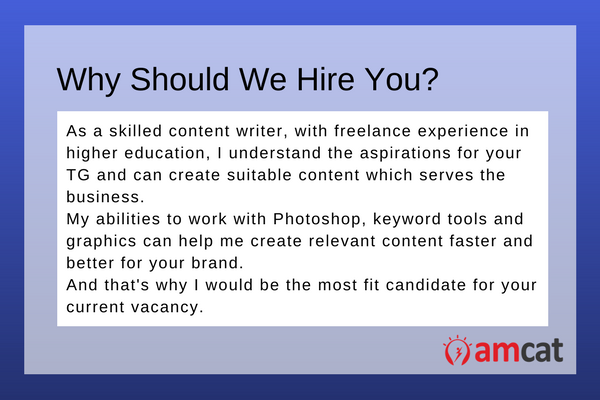
A model answer for a six-month content writer asked ‘Why Should We Hire You’.
If you need more help on handling this question, take a look at How to handle “Why Should We Hire You”.
3. What are your strengths?
Know your strengths and weaknesses.Most candidates take it for granted that they will know the
answer to this question. However, this (over)confidence costs them in
the end as they find it hard to frame their answer.Yes, it is an easy question, but that is the whole point of it.
Why this question:
This question is to test how you will respond
to something like this and that is why you need to put in some thoughts
and preparations to get it right. Despite being one of the most widely
asked questionsinjob interviews, interviewees tend to mess it pretty often.
How to Answer:
Do not use too many adjectives or go on with a list of
strengths you have. Instead, sit, think, relax, choose one or two skills
and explain why you consider having those strengths. Include strengths
that the company is looking for. Some prior research will provide you
with enough clues for that. And, even if you have an impressive list of strengths to your name, try not to come across as too arrogant. Stay positive
throughout your answer. You can begin by saying – “I have strong ethics
while at work. When I have to meet some deadlines at work, I try to
complete it within the stipulated time or ahead of that. While I was in
my college…”
The Right Answer:
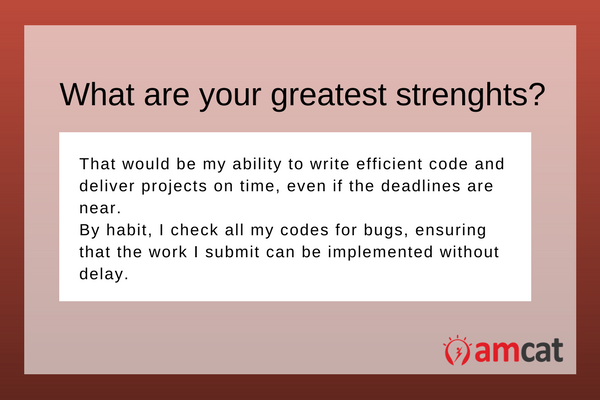
In reference to the job – A model answer for a developer asked ‘What are your strengths’?
You can read up more on how to answer this particularly tricky job interview question by clicking on How to answer “What are your strengths and weaknesses?”
4. What are your weaknesses?
Talking about your weaknesses during a job interview.The question that follows is something you can amalgamate with your previous answer.
Why this question:
According to an interesting write-up on ‘The Business Insider‘, – What Hiring Managers Really Want To Know
– the question is a test of character. If I were to liken it to an
onion, it is a question with multiple layers, which can be peeled
through for each of them.
The first layer is obvious – there are looking for cues or red flags
on why they should not hire you. Next, they are looking at your ability
to be prepared and maintain composure in a difficult setting. They also
want to know how self-aware you are and whether you’re doing anything to
overcome them.
What are they ‘really’ asking:
Summarising the points given above, here are the real questions nestled within a broader ‘What are your weaknesses’.
Why should we not hire you?
How do you react in a pressure situation?
How self-aware are you?
Would your weaknesses impact your job performance?
What are you doing to improve on your weaknesses?
How to Answer:
Do not say that you don’t have any because that’s arrogant,
overconfident, and practically not true! Instead, talk about your
weaknesses and talk about how you are working towards eliminating them.
Do not count waking up late, drinking, smoking, etc. as your weaknesses.
The Right Answer:
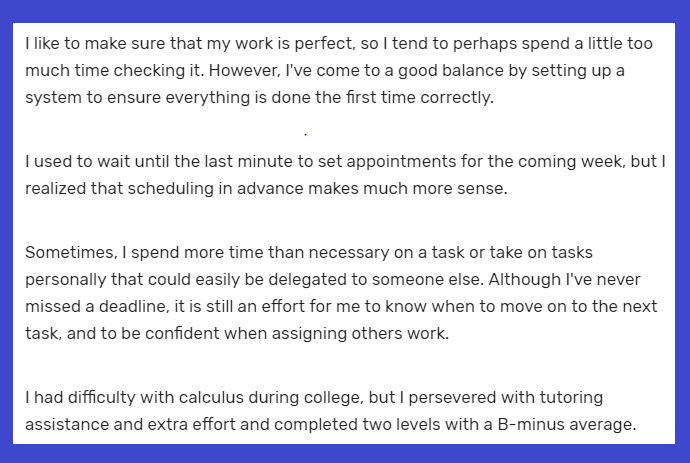
Some of the best answers when talking about your weaknesses. (Image: The Balance)
5. What are your long-term goals? What are your short-term goals?
Know how to answer the fresher interview question about your career goals. (Image; Flexjobs)
This is to check your commitment towards the job. A casual query like
this can turn into a probe into your maturity and the levels of
dedication you maintain towards your overall work graph.
Why this question:
From a recruiter’s perspective, the job interview is the best time to
get focused information from a candidate, which will help them make a
decision about them. Asking about their goals, both short-term and
long-term goals, helps these recruiters understand where they are coming
from and what plans they have for their lives.
What are they ‘really’ asking:
This also lets them decide whether the candidate would be a good hire
and would stay in the company. What motivates them and where would they
go, if they face an opportunity in line with those goals – both
internally and externally.
How to Answer:
Haven’t thought about your future, five years down the line, let
alone in the coming six months? Start thinking. This is how you can
answer this fresher interview question.
Think of what you want to do in 6 months, 1 year, 5 years
Include the Company in your plans
Begin explaining short-term goals.
Include long-term goals, but don’t talk about salary or explicit details
So, don’t say you want to earn a lot of money and then run away to
Prague. Yes, there are interviewees casual enough to answer that. On the
other hand, don’t say your long-term goal would be getting “your chair”
(the interviewers). That will pretty much take away the job from you.
The Right Answer:
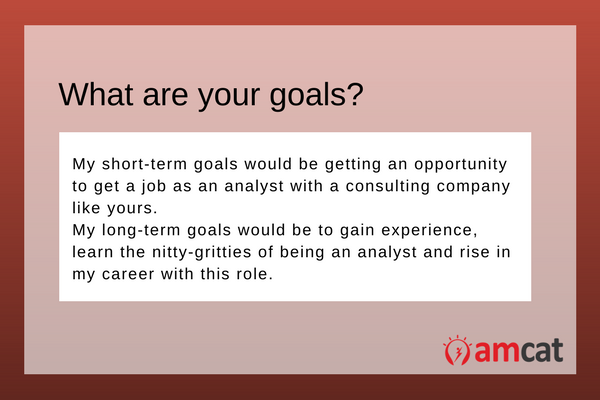
A model answer for an analyst on what are your goals.
To know more about creating your work goals, we recommend this read.
6. How well do you handle stress/pressure?
How well do you handle stress also adds to the workplace environment.
This is a very common fresher interview question that you will come across.
Why this question:
When an interviewer asks you this question, he is keen on knowing how
you are affected by pressure and what is your way of managing it.
What are they ‘really’ asking:
The interviewer is checking for your composure, work ethics and how you actually stand against real-life situations.
They’re asking:
What are your stress points
Do they impact your job performance
What do you do in a crisis situation
What are your weaknesses – things which can put you in a crisis situation.
How do you handle such a situation
How to Answer:
You need to be well-prepared for this in advance as you can’t get
away by saying you are never affected by any kind of work pressure.
After all, almost every individual get affected by work pressure at any
point of time.
The best way you can answer this question is by giving specific
instances from the past when you managed to do good in spite the
tremendous pressure. That can give a clear picture to the interviewer
about your ways of handling stressful situations.
The Right Answer:
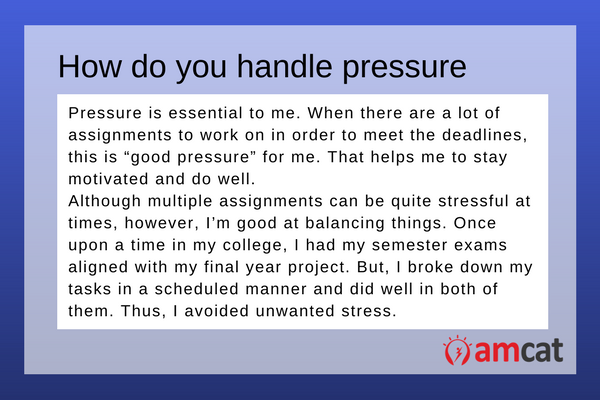
A model answer on How do you handle pressure.
7. Are you willing to relocate/travel for work?
Would you move or relocate for work. (Image: LearnOutLive)
Moving to a new city can be an exciting idea, but when a recruiting
manager asks you this question, he is looking for something different
than what you are thinking. He wants to judge your level of enthusiasm
and passion for the job role.
Why this question:
A recruiter who asks this question is more privy to the demands of
the job position than the candidate. And they’re filtering candidates on
different counts – one being flexibility and availability at different
locations and the other being an inclination to go places for the job.
They are also checking on your enthusiasm and willingness for the job on offer and the company.
What are they ‘really’ asking:
With this one question the recruiter asks you:
Would you be open to travel for the job?
Would you be open to transfers for the job?
Would you be able to come in, when required?
Are you really keen on this job?
How to Answer:
While answering this question, emphasize on your willingness to work with the company. Show your enthusiasm for the job role.
Don’t respond with a ‘No’ even if you are not willing to relocate.
The Right Answer:
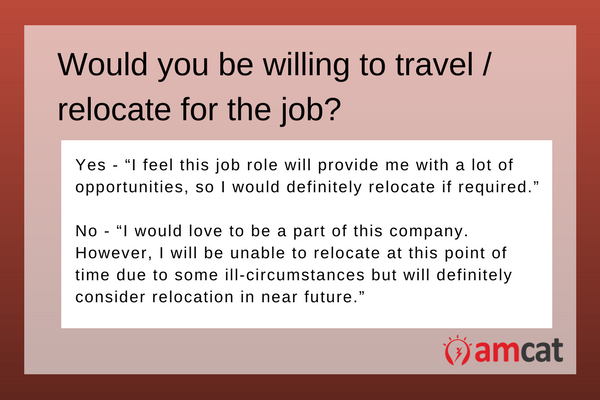
Model answers on ‘Would you be willing to travel or relocate for the job’.
8. What are your hobbies?
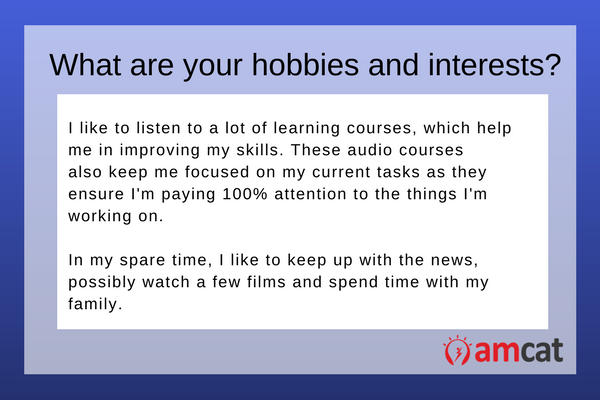
Pick a hobby, talk about it.
This question is necessarily not asked to judge you on your job role. By asking this question, an interviewer wants to get an idea of how you are as an individual.
Why this question:
A recruiter might be interested in knowing about your health, energy
level, or your ability to gel with your colleagues. Doing things apart
from the job means that you are an all-rounder and your hobbies give an
insight into the type of person you are.
What are they ‘really’ asking:
Specifically, the question behind the question on your hobbies and interests depends on who is asking it. If it’s the HR or the first-line recruiter, they want a better understanding of you as an individual and yourcommitment levels to your interests.
If it is from your reporting manager, then it’s to get a better sense of you and whether they would be able to get along with you, beyond the formal office structure.
How to Answer:
There are certain hobbies and interests
that should obviously not be discussed in an interview. Even if your
favorite time-pass is partying, it is advised not to say it at all. Same
goes for activities like gambling, drinking, smoking, or any other
illegal activity.
While answering this question, make sure that you are honest and your
hobbies are genuine. Don’t say that you are a fitness enthusiast even
if it’s been more than a year since you last hit the gym. Whatever you say, be prepared for follow-up questions.
For example, if you say you love watching movies, be prepared for the
last movie you watched, or the type of movie that excites you.
In short, include these things:
Mix professional and personal interests
Mention positives – things that contribute to you (health, education, learning)
Mention positives with community good – volunteering, green initiatives, helping others
Include your passions and be prepared for follow-ups
Improve your employability skills and in turn your chances to get hired (anupartha)
This may seem to be a simple question, but it isn’t! For most
candidates, it can feel like the most exciting question of their
interview. But please stay calm as this doesn’t necessarily indicate
that you have been selected for a position.
Why this question:
Usually, employers ask this question when they hire for an immediate
joining and the position is essential to company’s operations.
What are they ‘really’ asking:
The recruiters are judging your position right now – how eager you
are for this position and how soon would they be able to close it, if
they hired you.
A quick as soon as possible means you need this job straight up –
maybe you’re between jobs and gives them an upper hand in the
negotiation process.
How to Answer:
While answering this question, avoid sounding too desperate (even if
you want to start it right at the moment!).The best way you can respond
to this question is by conveying that you wish to start it as soon as
possible.
Communicate your eagerness to join soon.
Factor in your current commitments – for a fresher these could be the time you graduate, any upcoming plans
Give a clear date
Ask about the company’s needs and requirements
The Right Answer:
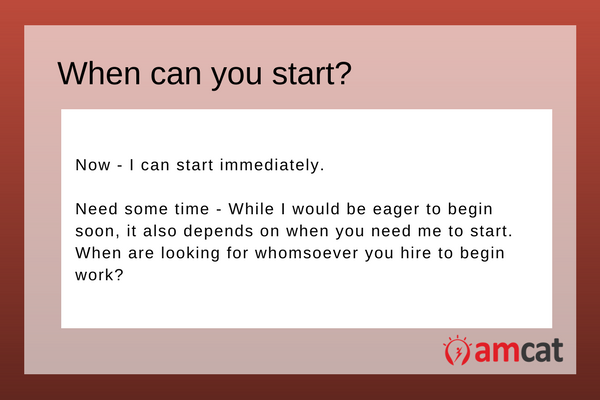
How to answer, ‘When can you start’.
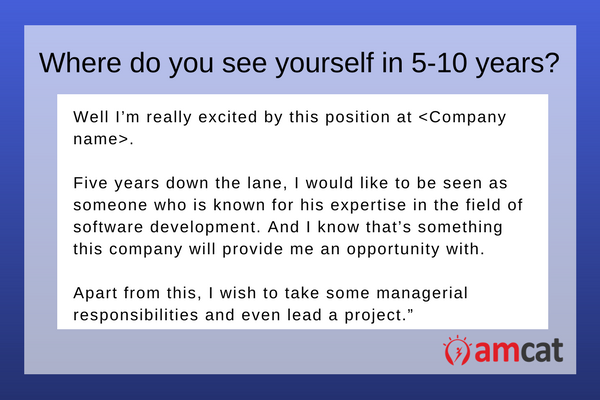
10. Where do you see yourself in 5-10 years?
Career Tips (career.ku.edu)
When a recruiter asks you this question, there may be a lot of
answers arising in your mind – “I would like to move up the hierarchy”,
“I want to be the best version of myself”, “At your role”, or “I want to
see myself as a consultant.” However, you should refrain from saying
any of these out loud in an interview.
Why this question:
An open-ended approach to knowing about your career goals, this is an
attempt to learn about the maturity level of the candidate, their
willingness and dedication to the prospective job.
What are they ‘really’ asking:
Repeating the above point, here are what they’re really asking:
Your goals
Your willingness to continue with the brand
Whether you would be a good role fit
How to Answer:
So, how do you answer this question? You can be honest and still
answer them what they expect to hear from you. Just think about where
this position can actually take you and how that is in line with your
broader career goals.
The best you can do is be honest and try to keep your answer relevant
to your job and the industry. Don’t share your plan of writing a novel
in five years when you are applying for the position of a Programmer.
This is a very tricky question. It might happen that your dream job
has nothing to do with the job for which you are being interviewed.
Still, avoid mentioning it. Rather try connecting it to the position for
which you are being interviewed.
Why this question:
Interviewers ask this question to know how this position motivates
you. Or, whether you will stick to the position or you just want to take
this up as a short-term assignment.
What are they ‘really’ asking:
When a recruiter asks you about your dream job, they’re really asking you these questions:
What is your motivation
What are your positive stress points
Do these idyllic aspirations match our work environment
Would you fit into the current role/organisation
There are also instances where the recruiter may not be a company
employee, but a consultant. In that case, if they’re asking you about
your dream job, they may have evaluated you as a good candidate for
future positions and may connect with you, if they see something
similar.
How to Answer:
Ideally, you should not answer specific job titles. Don’t
share your ambitions about a job whose responsibilities are far from
achievable while staying in the position that you are applying for. A
good idea is to focus more on skills and not the designation.
Focusing on the industry is the key to answering this question.
The Right Answer:
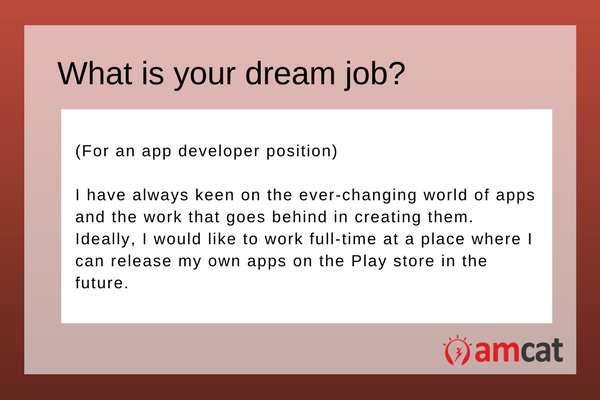
A model answer for a prospective app developer asked, ‘What is your dream job’.
12. Are you comfortable with late night and weekend shifts?
Know how you feel about working on your personal time. (Image: Unperfection)
Another tricky question asked commonly – especially at startups,
mid-size companies and with volume-oriented roles, like sales. So, be
ready for this one if you’re going to one of these interviews.
Why this question:
The question doesn’t mean your company is planning on ruining your
weekends. But depending on workload, companies do need flexible
candidates who can handle the pressureat the workplace and work late when required.
What are they ‘really’ asking:
The recruiter is asking you:
How flexible are you?
Can you take initiative to sacrifice personal time for a situation?
Can you handle workplace pressure?
Can we rely on you to step up, if required?
How to Answer:
Ideally, a carefully enthusiastic response towards being occasionally willing to do so, is a good way to go.
If you aren’t comfortable with it for some reason, state the reason
politely. Or you can just say that it would be fine once in a while but
you normally prefer maintaining a work-life balance.
The Right Answer:
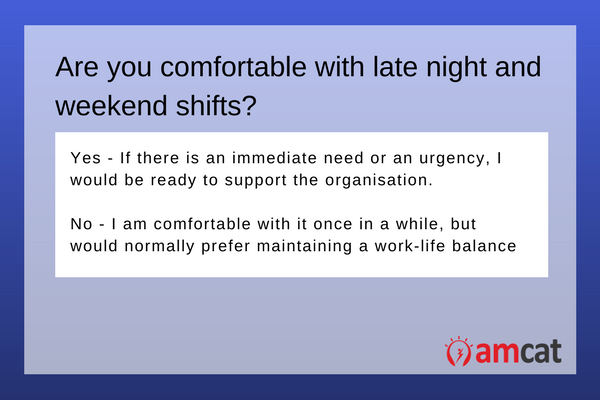
Model answers on the question would you be willing to work late shifts and weekend shifts.
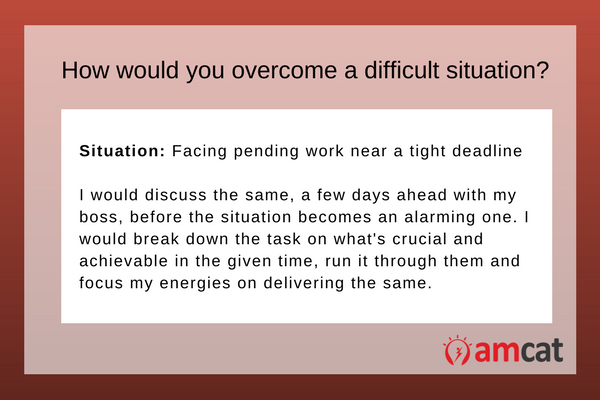
13. Create an imaginary difficult work situation and tell us how you will overcome it?
Have a problem-solving approach especially while preparing for fresher interview questions. (Heather Marcus)
Making up an imaginary work situation on the spot can be difficult. It is considered one of the toughestinterview questions which test a candidate’s natural characteristics that can’t be analyzed in a short interview.
Why this question:
Interviewers ask this question in order to know how you will deal
with an unprepared situation that might arise during your work tenure.
What are they ‘really’ asking:
A basic, open-ended question this allows the interviewer to
understand the candidate beyond scripted answers and the brief on their
resume. It also lets them understand the likely ways in which the
candidate would respond to challenges and the kind of situations they
may face in their role.
How to Answer:
When this question is thrown at you, stay calm and composed. Go back
to the past and think of any difficult situation you might have faced.
It can be anything related to your past academics or professional career.
You can tell about the dilemma of choosing your stream in the college, or about the unconventionalcareer path
you had to choose for yourself. You can mention who helped you during
that stage of your career. Or, if you had to choose an unconventional
career for yourself, how you persuaded your family members.
If you can’t link this question to any incidence from the past, you can instead relate it to your job description
of the current job. You should develop an idea of unusual scenarios
that might arise while in the job and the possible outcomes of that.
Avoid giving a long and unnecessary description. Your ideal response
should be short and supported by relevant facts.
The Right Answer:
A model answer for ‘How You Overcame A Difficult Situation.’
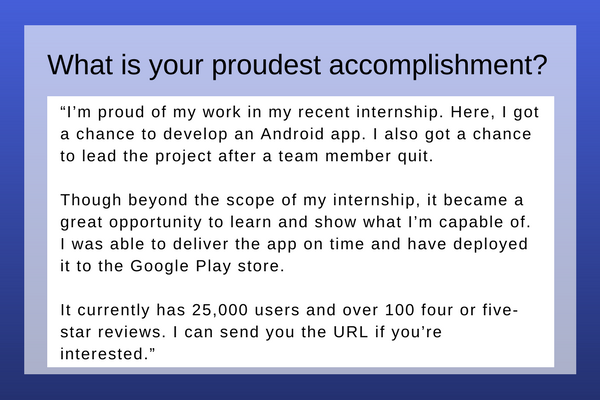
14. What’s your biggest accomplishment?
Looking for career success tips? These hold true in each and every case.
Another tough interview question for a fresher to face, this
close-ended question is as much a test of calibre as of self-awareness.
Why this question:
An interviewer intends to know about your biggest achievements at work in the past and also about your work ethics.
What are they ‘really’ asking:
They wish to analyse you in a larger sense, beyond the scope of
standard interview questions and the resume. Your answer helps them
gauge your level of maturity, insight, how you act in different
situations. It is also an insight into your soft skills – confidence,
problem-solving, initiative, self-management and adherence to tasks.
How to Answer:
The best you can do is tell about an accomplishment that is directly
related to your job. Give an instance from the last job where you did
extremely well. Keep in mind that you mention the accomplishment that
added value to the company. Focus more on the core values and show them how you can be an asset to the company.
On the other hand, don’t lie if you don’t have anything concrete to
tell. Be honest that you are still waiting for something that can be
called as your biggest accomplishment.
The Right Answer:
A model answer on ‘What is your proudest accomplishment’. (Originally carried by Charlotte Observer)
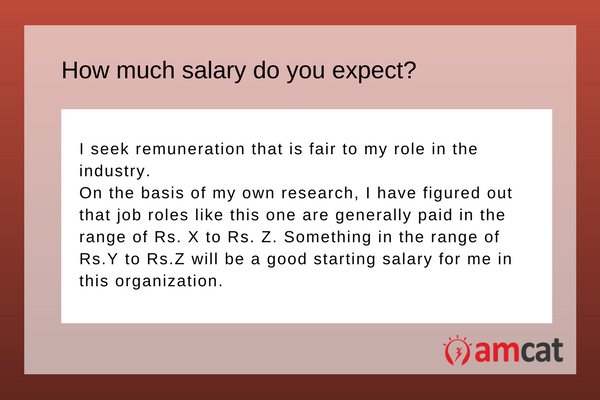
15. How much salary do you expect?
Going for your first job? Here’s how you can negotiate your salary. (Image: HT)
Although this question comes so straightforward, the answer is
complex. At the interview stage, when you have still not been finalised
for the role, you won’t wish to give the chance up with an ambitious
number. Neither would you want to commit to a small number and put
yourself in a corner.
Why this question:
From the interviewer’s perspective, this question is an obvious
filter – whether the candidate would realistically fit the company’s
budget or not. It is also a judgment call – on maturity, self-awareness
and industry awareness.
What are they ‘really’ asking:
Here is a list of questions they are really asking:
Have you thought about your worth?
What kind of salary do you expect?
Do you fit our budget?
What is the scope of negotiation?
Should we select you?
How to Answer:
Just because they are asking doesn’t mean you will get what you
quote. In fact, it’s a test as well. Do not say something that doesn’t
go well with the position. Do your research before you quote any number.
And, in other words, be realistic and keep in mind what not to say in an interview.
The Right Answer:
A model answer on salary expectations for a fresher.
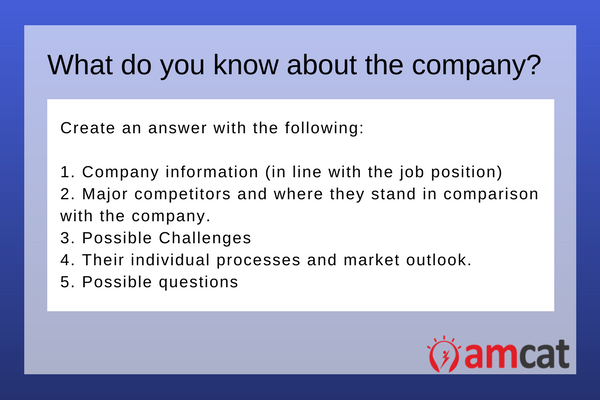
16. What do you know about this company?
Do your company research before the interview. (Image: Groupon)
With this question, interviewers choose to filter the desperate
candidates from the prepared ones. This question is not just about
company knowledge but your dedication to the position that’s available
and the company it’s available with.
Why this question:
Interviewers ask this question to know if you care enough to do
research about the role and the company before coming to attend the
interview. Their goal is to hire people who want a specific job in the
company and someone who is passionate about working there. They also
want to judge your level of curiosity to know things.
What are they ‘really’ asking:
Here is what they’re really asking:
Are you really serious about this job?
Have you invested time and effort in researching about our company?
How well do you know us? Our sector? Our strengths and Weaknesses?
Should we invest in you and bring you in as an asset to us?
How to Answer:
If you didn’t do your homework well, you can’t actually answer this question without stumbling and guessing. Read and research about the company
you are interviewing for. More similar questions can be raised, so be
prepared with enough information to build your answers on.
The Right Answer:
A model answer to this common fresher interview question – ‘What do you know about us’.
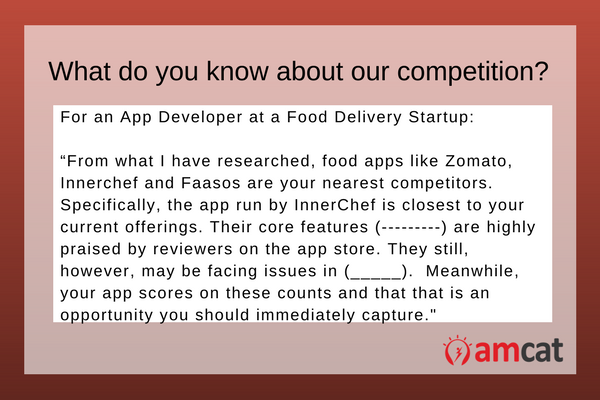
17. Who do you think are our main competitors?
A hiring manager wants to know how aware you are of the field you are
gearing for. And, the other companies with which they compete. Your
answer to this question shows your degree of awareness of the industry.
What are they ‘really’ asking:
They wish to know whether you’ve done the comprehensive company
research, which would make you an essential hire. So, it boils down to
assessing the seriousness, dedication and maturity of the candidate.
How to Answer:
To answer this question, you need to do a research about the chief
rivals of the company. Ensure that you don’t speak out the gathered
facts to the interviewer. Rather you should present an analyzed version.
You must not provide wrong facts and figures and disregard a firm in
any manner. By doing this, you can reduce your credibility. Don’t forget
that the sole aim of the interviewer is to understand how your services
can help the company in beating its major competitors.
The Right Answer:
A good answer for an app developer asked ‘What do you know about our competition’.
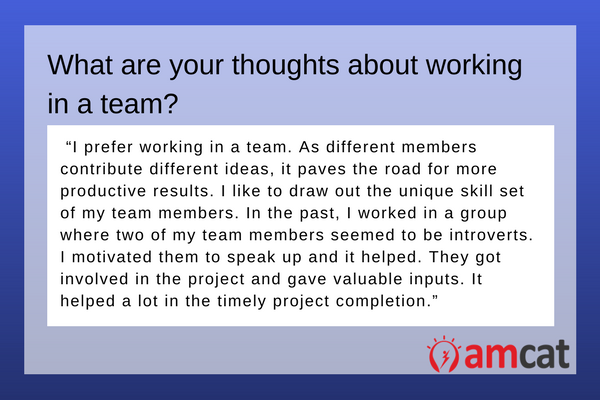
18. What are your thoughts about working in a team?
It is an unsaid rule that companies look for employees who can gel in
well with their teams. Team players are future leaders, and a candidate
who can’t work well in a team is more of a liability to the company
than an asset.
Why this question:
Beyond core skills, the move towards finding the right-fit candidates
is also dependant on their employability skills. It is these, which
ensure that a candidate remains productive for the organisation and
helps it along on an upward trajectory. And team skills remain core to
these employability skills.
What are they ‘really’ asking:
The recruiters are asking you:
Do you gel well within a team?
How do you perform, when you have to collaborate and coordinate with both within the department and outside?
Would you be a negative influence on the team? Would you hinder or hamper operations?
How to Answer:
Provide instances from your college or internship life to tell your interviewer how you are a team player.
The Right Answer:
A model answer when asked ‘What are your thoughts on working with a team’.
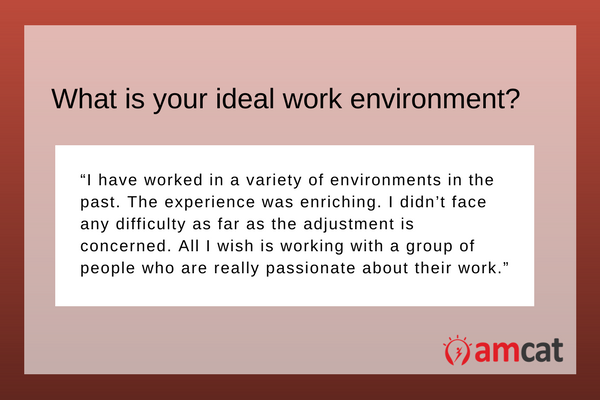
19. What kind of work environment do you expect?
A perfect blend of a friendly work environment and encouraging career growth.
When you’re asked this question, don’t relax. This query comes from
the niggling set of tricky fresher interview questions and is an attempt
at understanding the ideal work environment for the candidate. And,
whether the current office would be one.
Why this question:
The employer is often interested in knowing if the employee would be
able to fit into the environment of the office. Those factors can be the
organization structure, leadership style, work-life balance, size of the company, etc. For instance, the environment of a start-up will be quite different than an MNC.
What are they ‘really’ asking:
What a recruiter is asking you with this question?
Would you be a role-fit in our organisation?
What are your pain points? Would you leave an organisation if you don’t find your ideal environment there?
How to Answer:
Your answer to this question helps them identify your most productive
environment. The best you can do here is show your flexibility. It is
better to go to the company’s website in order to have a better
understanding of the same.
Handle the trickiest job interview questions like a boss.
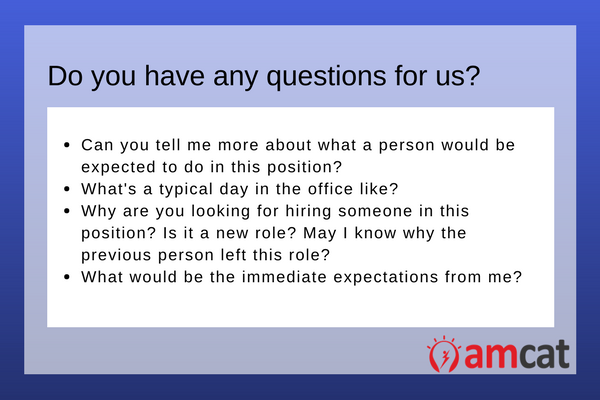
It is the most commonly asked question
towards the end of an interview. As it is one of the last questions of
your interview, it leaves you with a final opportunity to leave your mark on the interviewer. And, that is why there should be no chance of not preparing for it.
Why this question:
Often interviewers ask this question to understand how well you’re
prepared for this interview. They’re checking your preparation,
enthusiasm, and readiness to work with the organisation.
What are they ‘really’ asking:
They are asking you:
How keen are you on the job?
How confident are you about your chances?
Are you willing to learn from your experiences?
How eager are you to do this work?
‘How to Answer:
Prepare a list of questions that you want to be answered. Your
question should be asked to the relevant interviewer. For example, if
your interview is with the HR, your question should focus on the overall
interview process or the organization’s structure. In case you are
giving an interview to the person who will be your Manager, your
question should focus on the kind of work and the work responsibilities.
Keep in mind that you don’t ask questions related to off-work
activities like party and vacations. Avoid asking personal questions to
the interviewer. Try asking one question at a time and make the whole
process feel conversational.
The Right Answer:
What to say when you’re asked, ‘Do you have any questions for us.’Conclusion Preparing all these questions beforehand will help you
immensely in putting up a confident self for the interview. However,
don’t learn the questions by heart or it will sound as if you are just
repeating what you crammed up. Remember, the key to actually bagging the
job is to maintaining the right body language, as much as it is about
answering the questions correctly.
So, even if the question thrown at you is something you are not
prepared for, sit up straight, look the interviewer in the eye and
answer with confidence and without a quiver in your voice. If you think
that the right body language is something that you need to work on and
guided through then opt for online interview tools like Mock-AI. So, be casual, be confident and remember that this is not the last job you could get in the world, so just take it easy!
Best way to answer frequently asked HR Interview Questions for Freshers on Questions like Tell me about yourself...
Best way to answer frequently asked HR Interview Questions for Freshers on Questions like Tell me about yourself,
Why should we hire you, your strengths and weaknesses, how to handle
challenging situation, your hobbies and interests, inspiring person in
your life, change management, flexibility, Why do you want to work for
us, about the company, expectations from your first job etc. Before we
start, remember that, in a HR interview, there is no right or wrong
answer. All you have is a right way of answering, but the answer
in itself depends on the candidate.
Before you dig into the questions and answers for a fresher HR
interview, it will be helpful to read the introduction article here - HR Interview Preparation Tips for Freshers. Earlier article explains how one prepare for a HR interview.
HR interview more often, is not a selection process, but a short
listing process, where few of the selected candidates from previous
rounds are weeded out. So more than concentrating on getting selected,
one should be focused on NOT getting rejected.First few minutes are very
important and so does the first few questions. The interviewers do not
know anything about you. The impression you make in the first few
questions, is going to set tone for the entire session and plays a huge
factor
Let us split up the questions into few categories, which will be
About Candidate
About Company
About Common stuffs
HR Questions about Candidate
Hello, how are you today ?
This is more of a “make yourself comfortable” statements. Answer with
a pleasant smile. If you had any trouble during the day, don’t hesitate
to mention it. But make sure you express it in a positive note. Examples:
“I am very well today sir, thank you”.
“I am very well today sir, just that the traffic here is bit of a hassle. But I made sure, I start a bit early to beat it.”
Tell me about yourself.
The FIRST & BEST question for any HR interview. The answer to this
basically sets the tone of rest of the interview. Good news is – You can
earn a lot of points if this is answered right.
Give a brief of your education background (up to plus two is fine, your family and location, any of your hobbies etc.
You can also mention one of your major achievements, if it fits the circumstance.
Keep the answer to just about 3-4 sentences and not more than that.
No need to explain your strengths & weakness at this points (as that will definitely come along).
A common mistake seen is most HR interview is to start the sentence
like “I am basically from...” No need to start a sentence like that.
Keep the answer simple, to the point and give space and time for further questions. Do not stretch it too much.
Example:
“Hi I am Kiran and hails from Bangalore. I did my B.Tech in
electronics and communication from Rameswara College of engineering,
which is under Bangalore University. I had completed my plus two from
Chinmaya Vidhya Mission School and secured 98% in CBSE Boards. I have
four members in my family and I am the youngest son. I love outdoor
sports, specifically athletics and was a member of college athletic
team.” Must read - Awesome examples of Tell me about yourself with best answers
What are your key strengths ?
This is another most common question in any HR interview. The idea
here is to understand how much you know about yourself and how confident
you are about your strengths.
Just stay positive. Even a simple answer like “I am a very positive person” is good enough.
You can also change this as per the requirement of the interview.
Knowing a bit about the profile you are being interviewed helps as well.
Explaining your strength with an experience from the past is desirable here.
“Sir, my greatest strength is my ability to learn things quickly.
For example, I had to represent my college in an inter college science
exhibition, and was introduced to the team at the very last minute. I
was able to understand our exhibits and artifacts and present them with
great success”.
“I think my greatest strength is my positive attitude, even during
the most hardest of times. During my college project, there has been
couple of occasions, when our idea was not falling in place and the
results were negative. I had to believe and think positively and keep my
team motivated to persist on our idea, and finally we got the desired
result.”
“My best skill would be my verbal ability and articulation skill. I
have worked as editor for our college magazine and have been involved
with various literary forums during my school and college days.
Your heart is racing. Your palms have become sweaty. You can barely sleep a wink. Your mind is overwhelmed with the thoughts of that someon...
Your heart is racing. Your palms have become sweaty. You can barely sleep a wink. Your mind is overwhelmed with the thoughts of that someone.
Is it love?
Nope! It is your first interview! And that special someone is your interviewer.
But one thing is common. Much like love, you want it to be the one!
And if this is your first foray into that conference room, you are
like a baby taking his first steps. Unsure, nervous and totally
inexperienced.
However unlike your parents who probably held your hand and clicked
away the Kodak moments, we are here to help you prepare for those
seemingly benign, but all too important, interview questions. So read on
and you will only get wiser and not a second older than five minutes.
Well, maybe a few seconds more if you need to close the Youtube video of
the talking cat.
So here are a few commonly asked interview questions, not necessarily
exclusive for freshers, but certainly handy to rehearse well before
your first interview. Remember, it’s not an improv. It is better to
speak confidently rather than go “ummm…er…” (Read tips to improve your communication skills)
How to answer the 10 common interview questions for freshers
Q1. Tell us something about yourself.
Strange right?
No one’s asking you about the pros and cons of bipartisan politics.
Just something about yourself! And it is not like you are in grave
danger of revealing your darkest secrets. Of course you are not going to
tell them that your favorite movie is not Shawshank Redemption, as you’d like to claim. It is actually Prem Ratan Dhan Payo!
So why is this so intimidating? Well, ‘coz if you are not prepared, you run the risk of failing on the one question that sets the mood for the rest of the interview.
This question is a classic psychological trap to test how you
perceive yourself. You could start with your educational background,
where you’ve been brought up, some bit about your parents- the usual
facts. But you should be quickly transitioning to your strengths as
pertaining to making you a valuable future employee.
Here’s an example. My name is Gabbar Singh. I was brought up in a village in Chambal.
My parents instilled in me the values of honesty, integrity and
non-violence. I have always cared for the underprivileged and have
helped them several times to organize community festivals like Holi,
giving food and aid to small communities. I have even raised money to
help out ex convicts, thus giving them a second chance at life. I
believe in compassion and helping others. That’s the kind of person I
am.
– Says Gabbar, while applying to become the next Thakur of Ramgarh
Emphasize the good you have done, the good you can do and focus on
all your positive traits. As a tip, it is always a plus to use strong
words like I believe, determined, always, excellent instead of I think, I could, sometimes, maybe or okay. Okay?
Q2. Tell us your strengths and weaknesses.
Don’t brag and yet don’t hold back completely. There are the
strengths that no one should ideally have any grounds to question you
on. For example, unless they have proof of deceit, there is no reason
why someone should challenge your claim of being honest and
with-integrity.
And then there are the strengths that have to do with skills
associated with the job at hand. Be careful there. Only state the ones
you are fairly confident in. You can even vaguely scale your knowledge
of the skill.
For example, you can say Expert in Coding in Python, Cobra or whatever if you think you can handle any level of counter question on that particular skill. You can say Experienced if you are fairly good but not completely confident enough to handle any question thereto.
Always a good idea to say you are a fast learner. Nothing sounds more like music to an employer’s ears than that.
As for weaknesses, it is better to not show them your cards. And
unlike Poker, you are not going to feign a bad hand. Just take one of
your good qualities and spin it as if it is a bad thing. I work too hard and my family doesn’t like that. Or say something completely irrelevant like I have a sweet tooth. Like that would matter at your job! Oh well it might if you are applying in a bakery.
However you may want to state your qualities, make yourself desirable as a candidate and approachable like a good coworker.
Q3. Where do you see yourself 5 years from now?
If all goes well, sipping a Pina Colada, on a Caribbean cruise.
Nope! They want to know your career goals. It is hard for most fresh
graduates to look that far ahead when they are still quite unsure about
everything else. The best way to answer that is to talk in a bigger
picture and leave it somewhat open ended.
Whatever you do, never say in five years I see myself taking your job!!
You could say, for example, that your current goal is to become a part of the Management team (Read these tips to get promoted).
You may even want to add a few garnishes of how you want to use your
own time to train yourself in skills that may help you become better at
your job.
It is not a good idea to give the impression that you would be
looking for a way to move away from your hired post, right away. Keep
your response aligned with the current post. In other words, you are
going to work hard and grow to become more valuable to this company.
That has a nice sound bite!
Of course you have to educate yourself well in advance of the
possibilities the company offers. That brings us to the next question.
Q4. Why do you think this company is a good fit for you?
You need to know what the company does, what its values are, how it
has been performing, and any other relevant detail you can get. Then
frame the answer in a way that highlights how only this place can
help you grow, giving you the opportunities and an excellent platform
to reach the career goal you mentioned in the previous question. There
are buzz words we all know of. Just be careful to not make your response
sound hollow. I want to join this school because teaching students is the best way to learn and grow.
That’s good but that says nothing about why that particular school.
Instead saying something like this school is well known for being
student friendly, creating opportunities for them to excel in their
field of choice and producing some of the most creative and successful
alumni, in this country. I want to be a part of the process that drives
excellence. It will also give me an avenue to grow as a teacher.
Bang on!
Q5. Why do you think you are a good fit for us?
What have you got to offer to this excellent organization? Why should we bother to take you on?
And again, play your strengths to them. There is no need to sound
like you are the answer to their prayers. You just have to be confident
in your ability to contribute well and better than what they can already
perceive from your qualifications. It is your desire and passion that
counts here. These are typical interviewee emotions that they are
looking for. Try to get specific, if you can.
And most of all know the company values and emphasize how they
resonate with you. Borrowing the example from the previous question, you
probably shouldn’t refer to children as brats, if you want to get hired
in that teaching position. The school cares for the children. You
should too.
Q6. Could you explain the shortcomings on your resume?
It is natural to have a few blemishes in your past and sometimes you just have to include them in your resume (Also read resume writing tips). And it is also quite natural for an interviewer to be curious what happened there. So there is no need make up a fib.
Suppose you have a few D’s or an F or two scattered around. You can
simply tell them that you were unprepared, didn’t like the course
content or that you were still finding your calling. You can add that
you are serious about your career and have learnt the consequence of
slacking off.
Just don’t blame someone or something else for it (Read manipulation tricks of coworkers). That would be juvenile and a bad glimpse at what you might do if you fail at work.
Q7. Are you a team player?
However much of a disdain, you may have, for mankind, this is not the place to let it out. Most jobs are not meant to be handled alone. Not unless you mime. Yes is always a safe response. But you don’t need to stop
there. You can articulate a response showing that you recognize the
importance of team work in an office. Much like the team events you have
been a part of until then. No cooperation means no result. Sing to them
if you have to. Ek chidiya, anek chidiya
Post 80’s kids will never know what that is. Just Google Doordarshan, you millenials!
Q8. How would you handle a disagreement with authority?
Tied to the previous question but not quite so. While you may work
great in a team there is still a possibility that you end up having a
disagreement with someone. Management would really like to know whether
they would have to babysit or, you know, manage you all the time!
Give an instance from your past. How did you handle a difference of
opinion with your teacher, perhaps your parents or anyone you are/were
accountable to? Did you decide to not speak up and hope that metabolism
alone would take care of that unsettling feeling you are calling
acidity?
‘Coz any sensible company would probably not want that. The
appropriate response would be to express your concern and dialogue it
out. May just turn out that the authority was in the wrong and the
company benefitted from your suggestions instead.
Q9. What is your salary expectation?
Millions! No seriously, if you are not looking to replace Tata you
should probably quote something reasonable. And how do you know what
that is? Just look up will ya’? Know what they are likely to offer
before you walk in.
If you are a fresher, they will probably not even bother to ask. But
just on the off chance they do, know the number and say something close to it. Maybe a little more. At least they’ll know that you didn’t just walk in while wandering around.
Q10. Do you have any questions for us, our company?
This is code for The End and could be the last chance to leave
a good impression. So ask something intelligent. Not how long are the
lunch breaks! It will show a healthy curiosity in the company’s future.
Ask about expansion plans. Or even whether they have any expectations
from you before you join. For instance do they want you to familiarize
yourself with any tool, to get a head start. Or if you want to close
back from where it started, ask them to tell you something about
themselves!
You probably understand that what happens inside the interview room
is a combination of factors, mostly beyond your control. These are only
some of the more popular questions for freshers gathered from the
experiences of the have-been-interviewed. While you can never really predict the outcome of those minutes, you can only prepare yourself for the knowns (Also read effective interview skills to learn the techniques to look confident).
Ignore the sweaty palms and the occasionally erratic heart – not
unless you start feeling shooting pains in your left arm! Calm down,
make eye contact, smile and picture them naked if you have to. Oh wait!
No that’s for stage fright!
Take it easy. If it doesn’t go well, maybe this wasn’t it. Just call it a one day stand and keep looking for your one true job.
Good Luck!
Common interview questions (with example answers) 1. Tell me about yourself. Your interviewers will likely start out with a question ab...
Your interviewers will likely start out with a question about
yourself and your background to get to know you. Start out by giving
them an overview about your current position or activities, then provide
the most important and relevant highlights from your background that
make you most qualified for the role. If you’d like, it is generally
acceptable to include some light personal details about things like your
pets, hobbies or family. Doing so can help you be more memorable and
personable to the interviewer. Example: “Currently, I serve as the assistant to
three of the company’s five executive team members, including the CEO.
During my time at the organization, I have been recognized for my time
management skills, writing abilities and commitment to excellence. From my 12 years of experience as an executive assistant,
I’ve developed the ability to anticipate roadblocks and create effective
alternative plans. My greatest value to any executive is my ability to
work independently, freeing up their time to focus on the needs of the
business. It’s clear that you’re looking for someone who understands
the nuances of managing a CEO’s busy day and can proactively tackle
issues. As someone with a sharp eye for detail and a drive to organize, I
thrive on making sure every day has a clear plan and every plan is
clearly communicated.”
For more on answering this question,
2. How would you describe yourself?
When an interviewer asks you to talk about yourself, they’re
looking for information about how your qualities and characteristics
align with the skills they believe are required to succeed in the role.
If possible, include quantifiable results to demonstrate how you use
your best attributes to drive success. Example:“I am a vigilant and proactive Security
Officer working to ensure safe, secure, and orderly environments. I’m
also a lifelong learner, always seeking out the latest security
equipment and techniques to patrol buildings. Lastly, I am thorough,
documenting all incidents and actively making suggestions to management
about security improvements and changes.”
For more on answering this question, v
3. What makes you unique?
Employers often ask this question to identify why you might be
more qualified than other candidates they’re interviewing. To answer,
focus on why hiring you would benefit the employer. Since you don’t know
the other applicants, it can be challenging to think about your answer
in relation to them. Addressing why your background makes you a good fit
will let employers know why your traits and qualifications make you
well prepared. Example:“What makes me unique is my experience of
four years in retail. Because I’ve had first-hand experience fielding
shoppers’ questions, feedback and complaints, I know what customers
want. I know what it takes to create a positive consumer experience
through marketing.”
For more on answering this question,
4. Why do you want to work here?
Interviewers often ask this question as a way to determine
whether or not you took time to research the company and to learn why
you see yourself as a good fit. The best way to prepare for this
question is to do your homework and learn about the products, services,
mission, history and culture of this workplace. In your answer, mention
the aspects of the company that appeal to you and align with your career
goals. Explain why you’re looking for these things in an employer. Example: “The company’s mission to help college
grads pay off their student loan debt speaks to me. I’ve been in that
situation, and I’d love the opportunity to work with a company that’s
making a difference. Finding a company with a positive work environment
and values that align with my own has remained a priority throughout my
job search, and this company ranks at the top of the list.”
For more on answering this question,
5. What interests you about this role?
Like the previous question, hiring managers often include this
question to make sure you understand the role, and to give you the
opportunity to highlight your relevant skills. In addition to thoroughly
reading the job description, it can be helpful to compare the role
requirements against your skills and experience. Choose a few things you
particularly enjoy or excel at, and focus on those in your answer. Example:“I’ve been passionate about user experience
design for most of my professional career. I was excited to see this
company uses Adobe products because I’m well-versed in the entire suite.
Also, I’m a huge advocate for applying agile workflows to design. I
think it’s the most effective way to tackle large projects. I was able
to successfully build and launch an agile process in my previous role as
UX manager, and we saw considerable improvements in project speed.”
6. What motivates you?
Employers ask this question to gauge your level of
self-awareness and ensure your sources of motivation align with the
role. To answer, be as specific as possible, provide real-life examples
and tie your answer back to the job role. Example:“Making a true a difference in the lives of
my patients and their families motivates me to strive for excellence in
everything I do. I look forward to seeing my patient’s reaction when we
get a positive outcome that will change their lives forever. That’s why
I became a nurse, and why I’m pursuing a position in pediatrics.”
Fore more on answering this question,
7. What are you passionate about?
Much like the previous question about motivation, employers
might ask what you are passionate about to better understand what drives
you and what you care most deeply about. This can both help them
understand whether you are a good fit for the role and if it fits into
your larger goals. To answer, select something you are genuinely
passionate about, explain why you’re passionate about it, give examples
of how you’ve pursued this passion and relate it back to the job. Example:“As an experienced, service-oriented
professional with more than a decade of experience working in boutique
salons, I thrive on creating a welcoming environment for all clients and
providing the highest quality skincare services. My specialized
training, along with my interpersonal skills, has helped me become adept
at developing long-term, trusted relationships that help to build a
loyal client base. These relationships are the reason I’m excited to go
to work every day.”
Fore more on answering this question,
8. Why are you leaving your current job?
There are many reasons for leaving a job.
Prepare a thoughtful answer that will give your interviewer confidence
that you’re being deliberate about this job change. Instead of focusing
on the negative aspects of your current or previous role, focus on the
future and what you hope to gain in your next position. Example: “I’m looking for an opportunity that gives
me the ability to build closer, long-term relationships with clients. In
my current role, the sales cycle is so short that I don’t spend as much
time building a rapport with my customers as I’d like.
Relationship-building is one of the reasons I chose a career in sales,
and I look forward to working with a company where that’s a top
priority.”
For more on answering this question,
9. What are your greatest strengths?
This question gives you an opportunity to talk about both your
technical and soft skills. To answer, share qualities and personal
attributes and then relate them back to the role for which you’re
interviewing. Example:“I’m a natural problem-solver. I find it
rewarding to dig deep and uncover solutions to challenges—it’s like
solving a puzzle. It’s something I’ve always excelled at, and something I
enjoy. Much of product development is about finding innovative
solutions to challenging issues, which is what drew me to this career
path in the first place.”
For more on answering this question
10. What are your greatest weaknesses?
It can feel awkward to discuss your weaknesses in an
environment where you’re expected to focus on your accomplishments.
However, when answered correctly, sharing your weaknesses can show that
you are self-aware and want to continuously get better at your
job—traits that are extremely attractive to many employers. Remember to
start with the weakness and then discuss the measures you’ve taken to
improve. This way, you’re finishing your answer on a positive note. Example:“I sometimes have trouble saying ‘no’ and
end up overwhelmed by my workload. Earlier in my career, I would take on
so many projects that I’d work evenings and weekends. It was stressful.
I realized this was counterproductive, so I started using workload
management tools and setting better expectations for myself and my
teammates.”
11. What are your goals for the future?
Often hiring managers ask about your future goals to determine
whether or not you’re looking to stay with the company long-term.
Additionally, this question is used to gauge your ambition, expectations
for your career and your ability to plan ahead. The best way to handle
this question is to determine your current career trajectory and how
this role plays into helping you reach your ultimate goals. Example:“I would like to continue developing my marketing expertise as well as my leadership skills
over the next several years. One of the reasons I’m interested in
working for a fast-growing startup company is that I’ll have the ability
to wear many hats and collaborate with many different departments. I
believe this experience will serve me well in achieving my ultimate goal
of someday leading a marketing department.”
12. Where do you see yourself in five years?
Understanding how you imagine your life in the future can help
employers understand whether the trajectory of the role and company
fits in with your personal development goals. To answer, provide general
ideas about the skills you want to develop, the types of roles you
would like to be in and things you would like to have accomplished. Example: “In five years, I’d like to be an industry
expert in my field, able to train and mentor students and entry-level
designers alike. I would also like to gain specialized experience in
user experience to be a well-rounded contributor working with design and
marketing teams on large-scale projects that make a difference both in
the company and the global community.”
13. Can you tell me about a difficult work situation and how you overcame it?
This question is often used to assess how well you perform
under pressure as well as your problem-solving abilities. Keep in mind
stories are more memorable than facts and figures, so strive to “show”
instead of “tell.” This is also an excellent opportunity to show your
human side and how you’re willing to go the extra mile without being
asked. Example: “It was the first day of my boss’s two-week
vacation and our agency’s highest-paying client threatened to leave
because he didn’t feel he was getting the personalized service he was
promised. I spent my lunch hour on the phone with him, talking through
his concerns. We even brainstormed ideas for his next campaign. He was
so grateful for the personal attention that he signed another six-month
contract before my boss even returned from her trip.”
For more on answering this question, visit the following resources:
Interview Question: “How Do You Handle Stress?”
Behavioral Interview Questions (and How to Answer Them)
How to Use the STAR Interview Response Technique
14. What is your salary range expectation?
Interviewers ask this question to make sure your expectations
are in line with the amount they’ve budgeted for the role. If you give a
salary range exceedingly lower or higher than the market value of the
position, it gives the impression that you don’t know your worth.
Research the typical compensation range for the role on Indeed Salaries, and tend toward the higher side of your range. Be sure to let the hiring manager know if you’re flexible with your rate. Example: “My salary expectation is between $XX,XXX
and $XX,XXX, which is the average salary for a candidate with my level
of experience in this city. However, I am flexible.”
For more on answering this question, visit the following resources:
How to Talk About Salary in a Job Interview
Interview Question: “What Are Your Salary Expectations?”
15. Why should we hire you?
While this question may seem like an intimidation tactic,
interviewers generally bring this up to offer you another opportunity to
explain why you’re the best candidate. Your answer should address the
skills and experience you offer and why you’re a good culture fit. Example: “I have a passion for application
development that’s grown stronger over the course of my five-year
career. The company’s mission aligns with my personal values and, from
my limited time in the office, I can already tell this is the sort of
positive culture in which I would thrive. I want to work for a company
that has the potential to reshape the industry, and I believe you’re
doing just that.”
16. Do you have any questions?
This might be one of the most important questions asked during
the interview process because it allows you to explore any subject that
hasn’t been addressed and shows the interviewer you’re excited about
the role. By this point, you’ll likely have already covered most of the
basics about the position and the company, so take time to ask the interviewer questions about their own experiences with the company and gain tips on how you can succeed if hired. Example: “What do you love about working for this
company?” “What would success look like in this role?” “What are some of
the challenges people typically face in this position?”
For more on answering this question, visit Interview Question: “Do You Have Any Questions?”
Much like preparing for a test in school, the best way to
succeed in your interview is to study and practice. Do research on the
company and the job, and practice your talking points until you feel
confident about your answers. The more you prepare, the more likely you
are to leave a lasting impression and outperform fellow candidates.

























Follow Us
Were this world an endless plain, and by sailing eastward we could for ever reach new distances